Ask anyone in Belanganj where to eat parathas and you will be pointed to Ram Babu Paratha Bhandar. Ram Babu Paratha Bhandar has been on that road since the 1980s, and in that time we have made a great many parathas for a great many people — locals on a Sunday morning, visiting food writers, and dignitaries whose security detail arrived before they did. What follows is what four decades at the tawa has taught us about a dish most people assume is simple.
The dough decides everything
An Agra paratha is not a Punjabi paratha and it is not a Malabar parotta. The dough is a plain atta dough, kneaded softer than you would for roti, and rested for at least half an hour so the gluten relaxes. A tight dough fights the rolling pin, tears when the stuffing goes in, and produces a paratha that is dense rather than layered.
The rest is the step home cooks skip and the step that matters most. A rested dough rolls thin without springing back, which is what allows a generous stuffing to be enclosed in a thin skin rather than a thick one. Get this wrong and no amount of good filling will save the result.
Stuffing ratio: the actual technical constraint
The defining characteristic of our paratha is the ratio of filling to dough. We aim for roughly equal weight — a paratha that is as much stuffing as it is bread. That is far more filling than most recipes allow, and it is only possible because of the dough work described above.
The stuffing has to be dry. Aloo is boiled, cooled completely, and mashed without water. Any moisture in the filling turns to steam on the tawa, and steam has to escape somewhere — usually by splitting the paratha open at the worst possible moment. Cooling matters as much as drying: warm mashed potato is sticky and will tear the dough as you seal it.
Seasoning goes into the filling, never onto the dough. Roasted jeera, ajwain, red chilli, amchur, a little garam masala, chopped green chilli and coriander. Salt goes in at the last moment before stuffing, because salt draws water out of potato and undoes the dryness you worked for.
The fillings we actually run
Aloo is the foundation and the most ordered. Gobi is the most technically demanding — grated cauliflower has to be salted, squeezed hard, and squeezed again, because cauliflower holds an astonishing amount of water. Paneer is the richest and needs the least seasoning, since over-spicing buries the milk flavour that is the point of it. Pyaz is the sharpest and the one that divides opinion. Methi is bitter and excellent in winter. Mixed vegetable works when a guest list needs variety more than it needs a specific flavour.
Seasonally we run matar in the cold months, when peas are new and sweet enough to carry a filling on their own. A matar paratha in January and a matar paratha in June are not the same dish, and we do not pretend otherwise.
Tawa discipline
A heavy iron tawa, brought properly up to heat before the first paratha, and held there. This is where most kitchens lose the dish. A tawa that is too cool produces a pale, leathery paratha that has absorbed ghee without crisping. A tawa that is too hot burns the outside before the filling warms through.
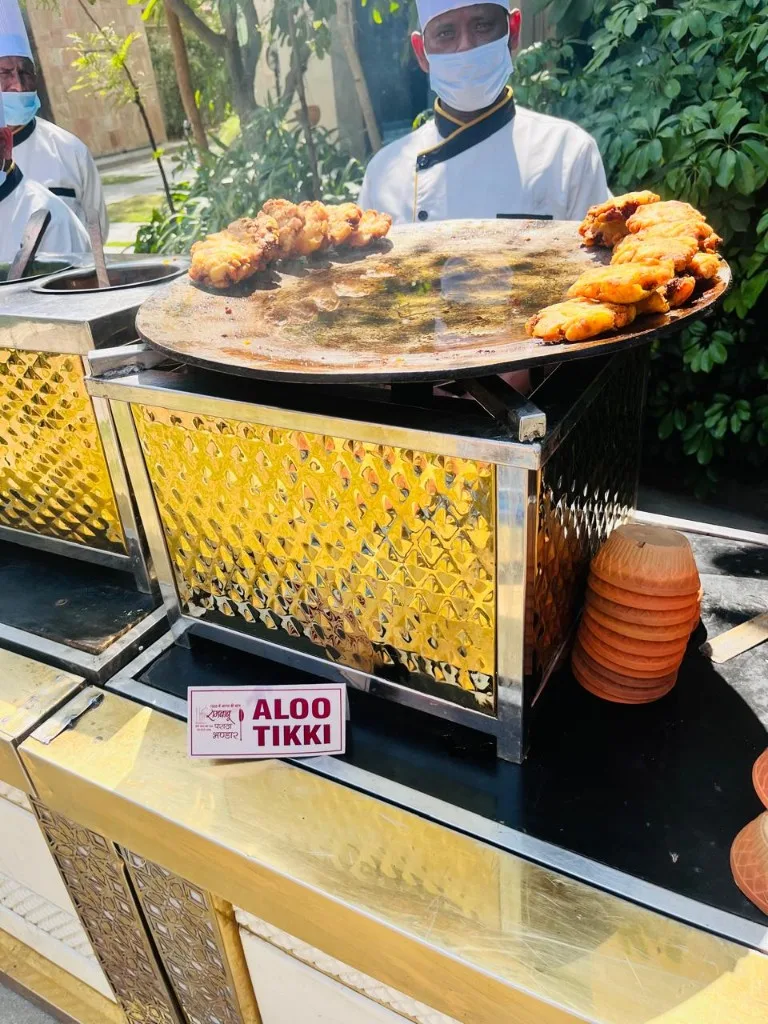
The paratha goes on dry first, for a few seconds on each side, to set the surface. Only then does the ghee go on, and it goes on in stages rather than all at once, pressed into the surface with the edge of the palta. Pressing is not decorative — it forces contact between the dough and the iron, which is what produces the blistered, unevenly golden surface that tells you a paratha was made on a tawa and not in an oven.
It comes off when the outside is crisp and the layers have visibly separated. A paratha held on the tawa past that point continues to dry out, and a paratha stacked under a cloth for twenty minutes softens back into something else entirely. This is the whole argument for cooking them live in front of guests rather than in a back kitchen.
The accompaniments are not optional
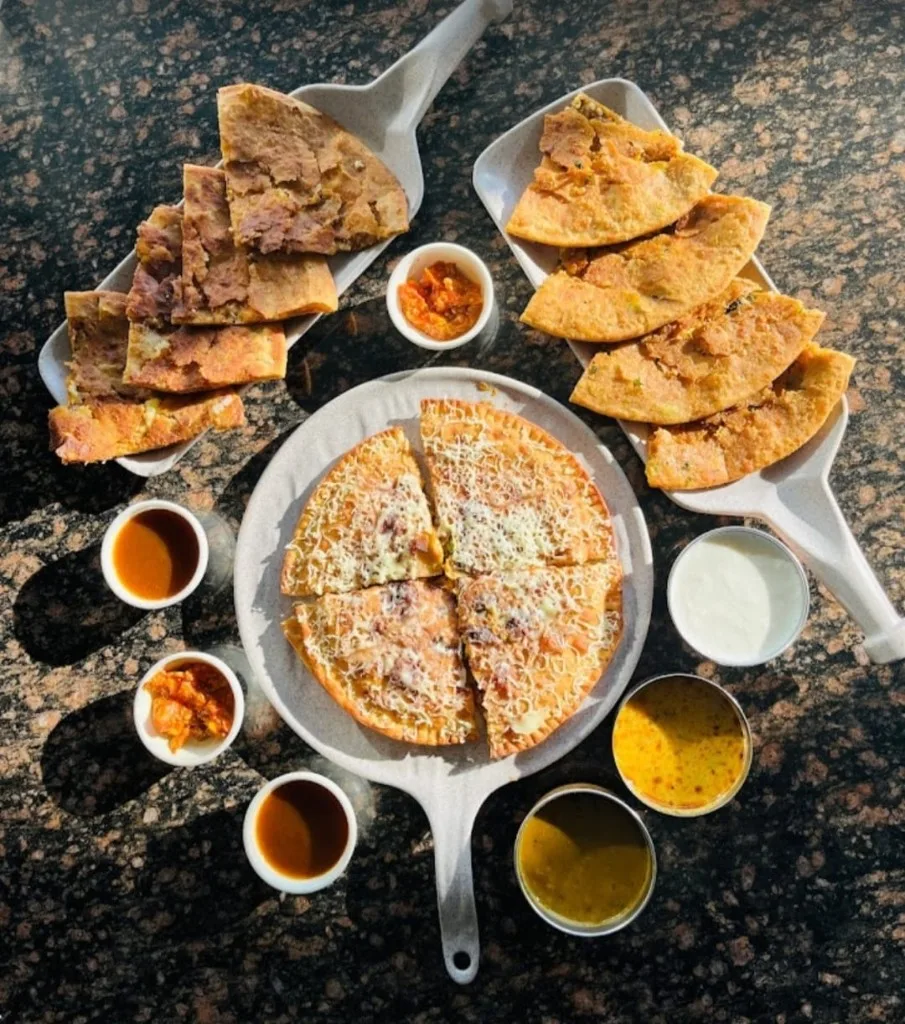
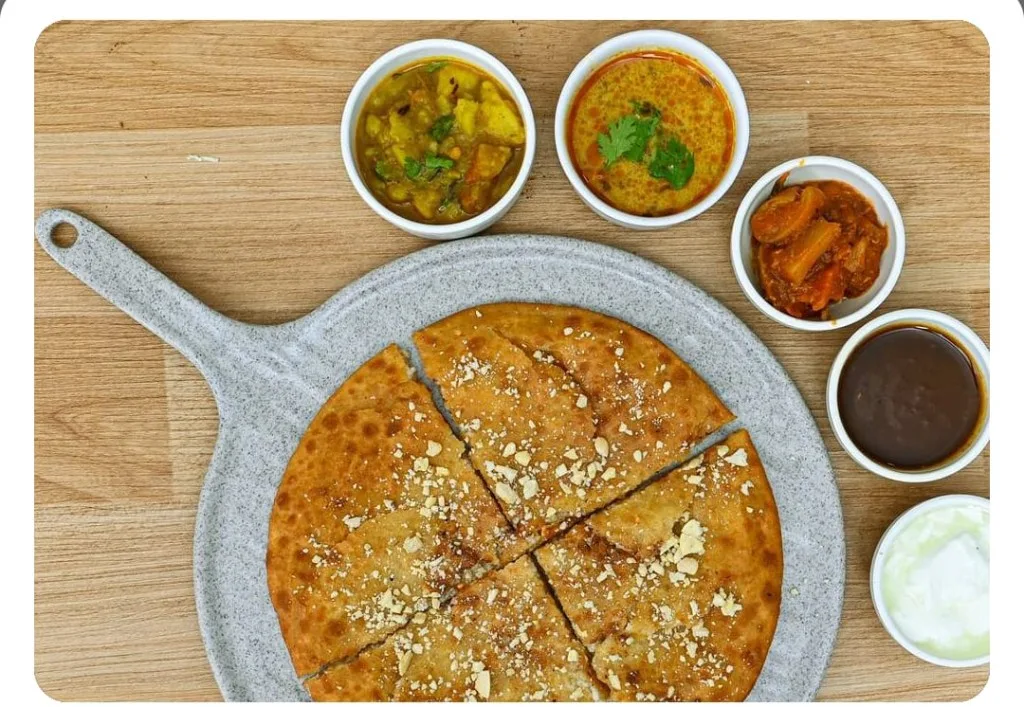
Traditionally, a paratha is served with three things, and serving it without them is serving a different dish. A seasonal sabzi — usually aloo, sometimes a dry seasonal vegetable — with enough gravy to be spoonable. A sharp pickle, mango or mixed, to cut the ghee. And a chutney, typically a green coriander-mint, occasionally an imli in winter.
Curd or lassi alongside if the guest wants it. Butter on top if the occasion is indulgent. What does not belong is a knife and fork, and we say so gently to guests who ask for them.
Why we cook them in front of you
Everything above adds up to a dish with a short window. A paratha is at its best in the two or three minutes after it leaves the tawa, and there is no holding technique that preserves that. Warming cabinets soften the crust. Foil wrapping steams it. Stacking compresses it.
Which is why our live paratha stations exist. Cooking at the counter is not a piece of event theatre we added for effect — it is the only way to serve a paratha at a 400-guest wedding that tastes like a paratha served to one person at Belanganj on a Sunday morning. Guests get to watch the rolling, the stuffing and the press, and they get the paratha at the moment it is meant to be eaten.
If you want to taste the difference before booking, we arrange food trials at our kitchen. You can also read about our wedding catering or browse menu options and indicative pricing.
Plan Your Event
Ready to bring this to your celebration?
Book a food trial, request our menu, or talk to our team about live paratha and chaat stations for your guest count.