The Braj region — Mathura, Vrindavan, and the villages between them and Agra — has a food culture that most wedding menus in North India ignore entirely. It is vegetarian by tradition rather than by accommodation, heavily seasonal, and built around a handful of preparations that are genuinely difficult to find outside the region. For a winter wedding, it is the most distinctive thing you can put on a menu.
Chuda matar
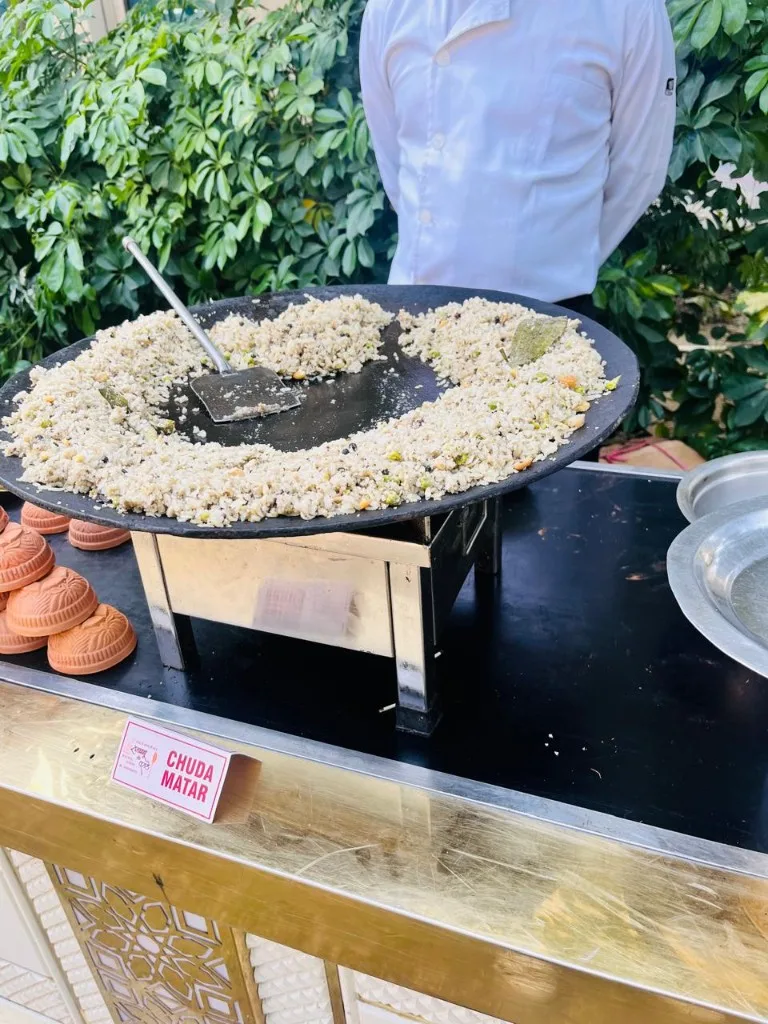
Chuda matar is the dish we are asked about most and the one that most reliably surprises guests who have not encountered it.
Chuda is flattened, beaten rice — poha, but a thicker and firmer variety than the one used in Maharashtra. It is soaked briefly, then tossed in ghee with fresh green peas, ginger, green chilli, and very little else. No onion, no tomato, no masala blend. Salt, a squeeze of lime, coriander, and sometimes a scatter of sev at service.
The restraint is the point. Chuda matar is a dish about the sweetness of new peas and the smell of good ghee, and every additional ingredient moves it further from what it is supposed to be.
It only works in winter. Fresh matar between December and February is sweet enough to carry the dish; frozen peas at any other time of year produce something technically similar and completely different to eat. We do not serve it out of season, and any caterer offering chuda matar in May is serving you something else under the same name.
Kanji and kanji bade
Kanji is a fermented drink of black carrots and mustard, left to sour over several days. It is dark, sharp, salty, and pungent in a way that no other Indian preparation quite is. It is also, historically, a winter preparation — the fermentation behaves differently in the heat, and the drink itself is meant to be taken cold.
Kanji bade drops soft fried moong dal dumplings into the kanji at service. The bade absorb the liquid, and the contrast between the mild dumpling and the aggressive kanji is the whole dish.
This is not a universal crowd-pleaser and it should not be positioned as one. It is the item that guests from the region will notice, comment on, and remember, and that has more value on a wedding menu than another safe option.
Pedas and the sweets
Mathura peda is the sweet the region is known for — a dense, slightly grainy khoya sweet, roasted darker than most pedas and less sweet than its reputation suggests. Good peda has a faint caramelised note from the roasting that industrial versions lack entirely.
Alongside it we serve seasonal winter sweets: gajar halwa made with red carrots while they are in season, moong dal halwa, and gond laddoo. All three are cold-weather preparations by tradition, and all three suit the end of a winter wedding dinner better than the ice-cream counter that has become the default.
Why winter is the season for all of this
North Indian wedding season and Braj food season happen to coincide, which is convenient. From late November through February, the ingredients that matter are at their best: new peas, red carrots, fresh gond, and the cold weather that makes hot tikki counters and fermented kanji make sense.
It also changes how guests eat. On a December evening, a hot live counter is where people gather. In May the same counter is somewhere they pass through. Building a winter menu around hot regional items rather than around a standard buffet takes advantage of that rather than working against it.
Building a Braj-forward winter menu
A menu that gives the region real presence without turning the wedding into a theme:
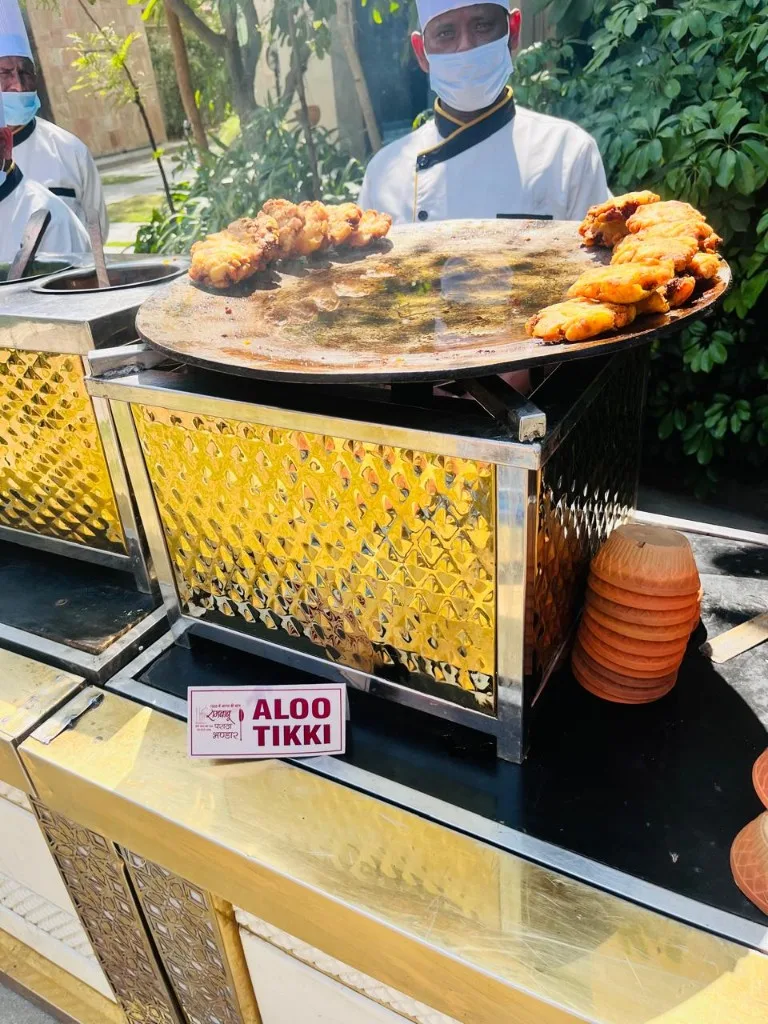
At the cocktail hour, a chaat counter with chuda matar and kanji bade alongside the more familiar golgappa and aloo tikki. The regional items sit next to the safe ones, and guests try both.
At the main service, one or two Braj preparations within an otherwise North Indian menu — a seasonal sabzi in the regional style, and dal handled simply rather than richly.
At the sweets, Mathura peda and one hot winter halwa, served warm.
That structure keeps the menu broadly familiar while giving it a specific identity. The alternative — a fully regional menu — reads as a statement, and works for some families and not others.
Where this comes from
Our kitchen in Belanganj sits at the edge of the Braj region, and has been since the 1980s. The seasonal preparations above are food we have cooked and eaten locally rather than dishes researched for a menu, which is mostly a statement about sourcing: we know which vendors have good matar in January and which peda is roasted properly.
For weddings and functions across the Braj region we work with that supply chain directly. For events nationwide and beyond we bring what travels well and adjust what does not.
More on catering services, our live chaat counters, and pure vegetarian catering for temple and ceremonial functions.
Plan Your Event
Ready to bring this to your celebration?
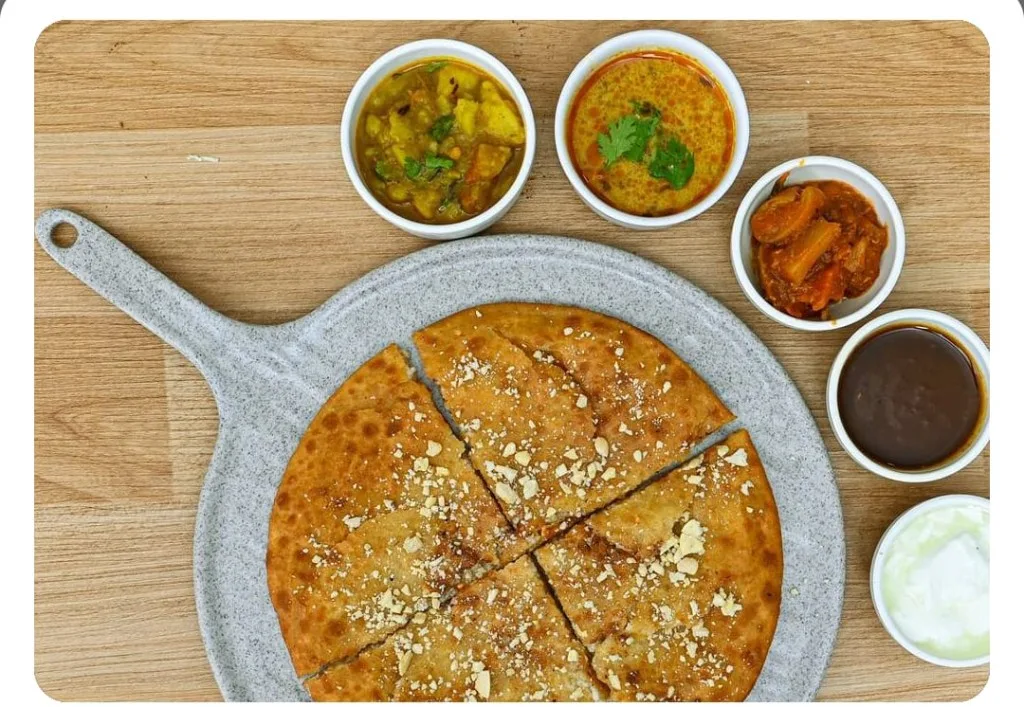
Book a food trial, request our menu, or talk to our team about live paratha and chaat stations for your guest count.