Corporate catering fails for different reasons than wedding catering. The food is usually competent; what goes wrong is fit. A menu designed for a seated dinner served to people standing between sessions, or a buffet sized for ninety minutes squeezed into twenty-five. Getting corporate catering right is mostly a scheduling and logistics exercise.
Start with the format, not the menu
Before any dish is discussed, four things need answering: how many attendees, how long is the service window, are they seated or standing, and what happens immediately afterwards.
Those four answers eliminate most menu options and make the rest straightforward. A standing thirty-minute break before a session needs food that can be eaten with one hand while holding a phone. A seated ninety-minute lunch can support a full multi-course menu. Treating those as the same brief is the root of most corporate catering complaints.
Size the service window properly
The arithmetic matters more than anything else. For a fixed break, plan to clear the full headcount in about two-thirds of the available time — twenty minutes of a thirty-minute break — leaving buffer for late arrivals and overrunning sessions.
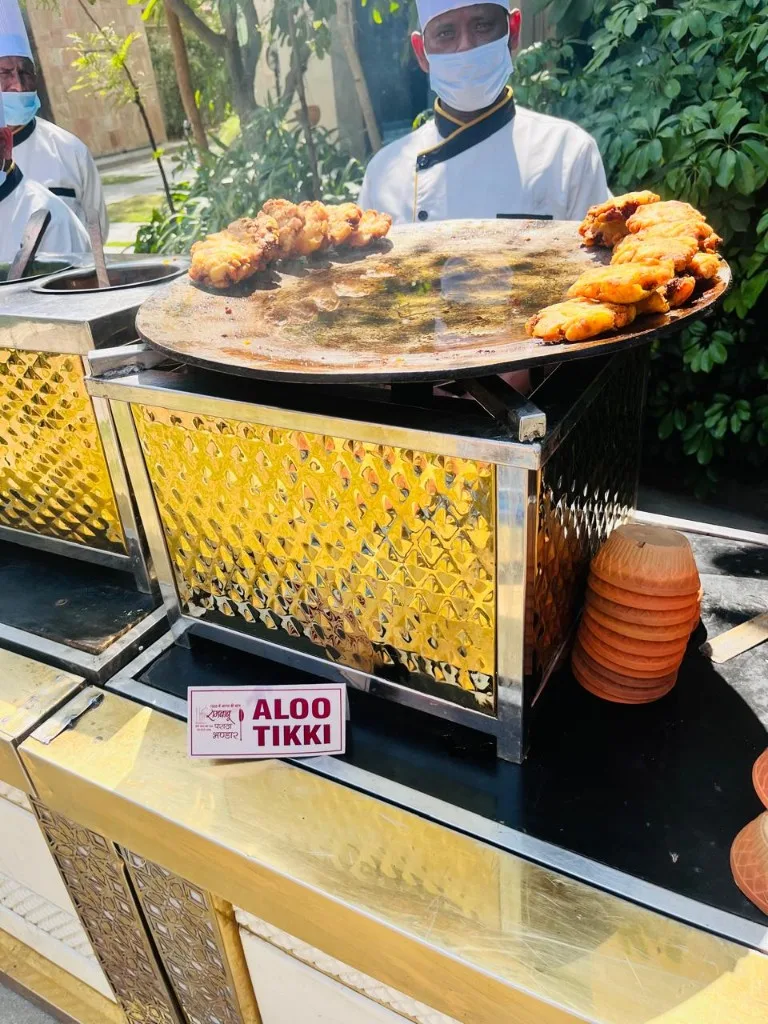
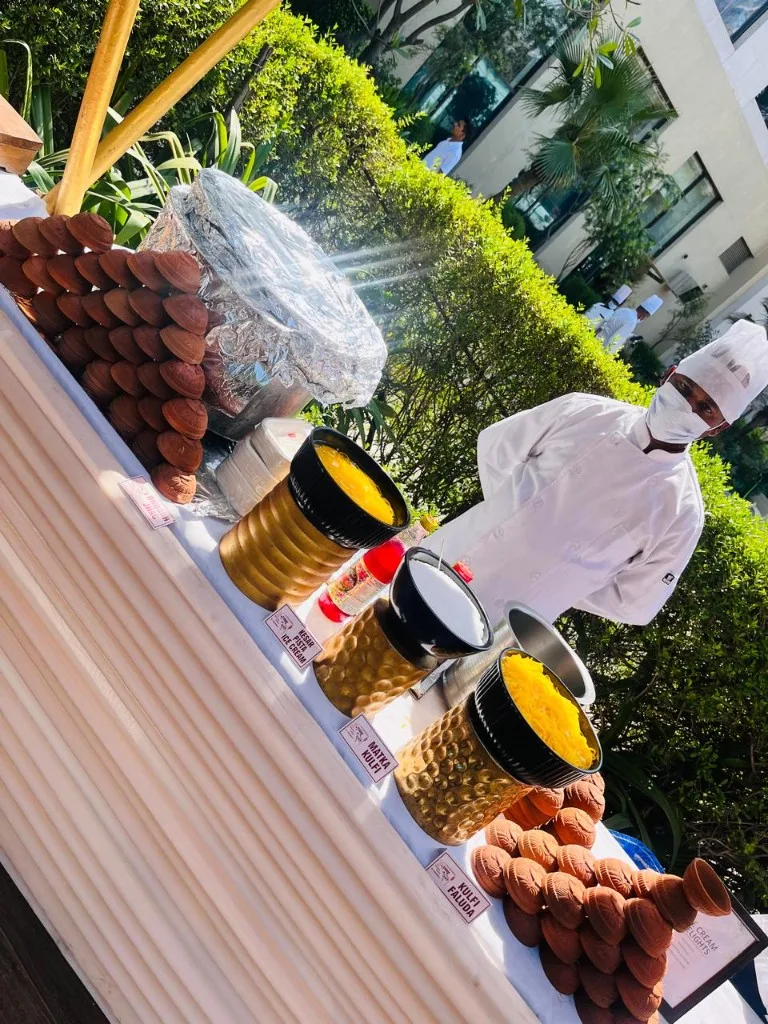
A well-run buffet line serves roughly 100 to 120 people per counter per twenty minutes. A live station serves 40 to 50 plates in the same period. At 300 attendees with a thirty-minute break, that means three buffet counters or a combination of counters and stations, positioned separately so three queues form.
One counter and hope is how a conference break turns into a forty-minute queue and a delayed afternoon session.
Plate design for standing guests
This is where corporate catering differs most from social catering, and where it is most often overlooked.
If guests are standing, everything on the plate must be manageable with a fork alone, or with hands. Nothing that requires cutting. Nothing with thin gravy that runs. Portions smaller than you would serve at a seated meal, because attendees will come back if they want more and would rather not carry a heavy plate.
We plate half-portions of substantial items with a small katori for anything with gravy, rather than pooling gravy on an open plate. It sounds fussy. It is the difference between a break where people eat and one where they take a plate, struggle with it, and put it down.
Provide standing tables. A significant proportion of guests will not eat at all if there is nowhere to set a plate down while they use their phone.
Timing around the agenda
Corporate events have hard schedule dependencies, and catering has to bend to them rather than the reverse.
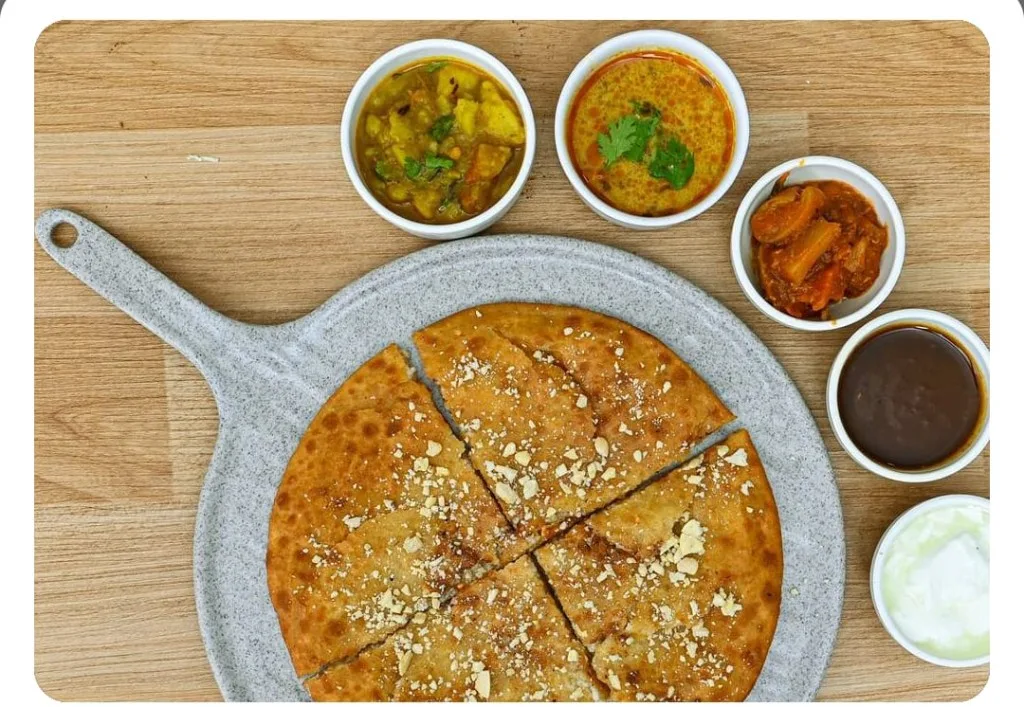
Morning sessions want a substantial breakfast, not pastries — attendees who travelled in early will be running on nothing by the mid-morning session. Live paratha counters work particularly well here, and are one of our most-requested corporate formats across India.
Post-lunch sessions are where attention collapses. A lighter lunch — less rich, smaller portions, more vegetable-forward — noticeably improves the afternoon. Serving a heavy creamed menu before a two-hour session is working against your own agenda.
Evening receptions and client events can be richer and slower, because nothing follows them.
Dietary requirements as a design input
Handle dietary needs structurally rather than as exceptions. A fully vegetarian menu removes the largest category of concern at once, which is one reason vegetarian corporate days have become common, and why our entirely vegetarian kitchen suits them.
Beyond that: label every dish clearly at the counter, prepare Jain options without onion, garlic or root vegetables from separate stock where required, and flag anything containing nuts or dairy prominently. Collect requirements at registration rather than discovering them at service.
An attendee who cannot eat anything on offer remembers that far longer than one who enjoyed the food.
Venue logistics to confirm early
Confirm with the venue before finalising anything: power and gas availability at the counter positions, whether open flame is permitted indoors, water access near service, ventilation in the service area, loading access, and prep space on site.
Corporate venues vary enormously here. A hotel with a full back kitchen supports almost any menu. An office premises or an older venue with a pre-function corridor and no gas supply supports a very different one. Designing the menu after the site visit rather than before saves reworking it.
Scale and cost
We cater corporate events from around 50 attendees. Below roughly 150 a single station or counter is sufficient; above that, counters are added rather than pushed harder.
Per-plate rates start from around ₹450 for a straightforward vegetarian buffet and ₹650 upward once live stations are involved. The variable that surprises most planners is that a compressed service window costs more than a relaxed one for the same headcount, because it requires more counters to deliver the same number of plates in less time.
More on corporate catering nationwide, live paratha stations, and menu and indicative pricing.
Plan Your Event
Ready to bring this to your celebration?
Book a food trial, request our menu, or talk to our team about live paratha and chaat stations for your guest count.