Corporate catering is judged by a different standard than wedding catering. At a wedding, guests have all evening. At a conference, they have twenty-five minutes between sessions, and a catering setup that cannot clear the room inside that window has failed regardless of how the food tasted.
Live paratha brunch stations have become one of our most-requested corporate formats nationwide precisely because they solve the timing problem rather than fighting it.
Why a live counter suits a corporate break
Conference catering usually means a buffet that has been sitting for an hour. It is safe, it is forgettable, and by the third day of a multi-day event attendees stop engaging with it.
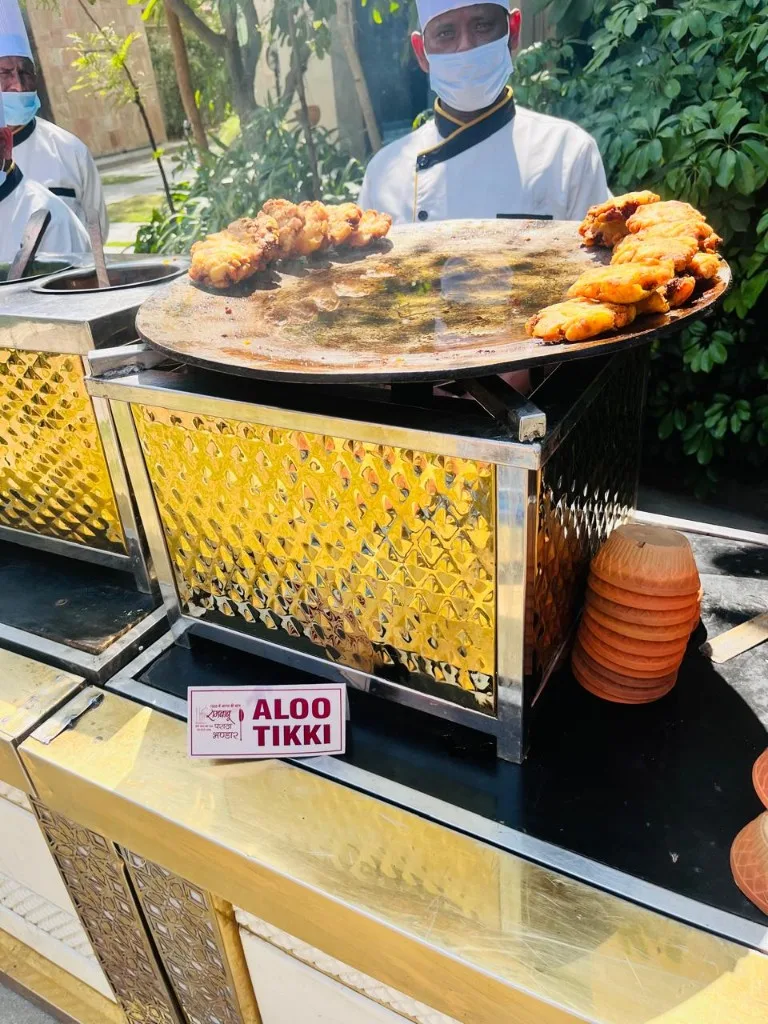
A tawa station changes the interaction. Food is made in front of people, it arrives hot, and it gives a break some energy without needing a theme or a gimmick. For client-facing events — launches, appreciation dinners, partner meets — that difference is the point. It reads as effort rather than procurement.
The operational advantage is that made-to-order does not mean slow. A paratha comes off the tawa in a few minutes, and with the prep staged correctly a station sustains a plate every twenty to thirty seconds.
Planning for a fixed service window
The whole design question for corporate catering is: how many people, in how many minutes?
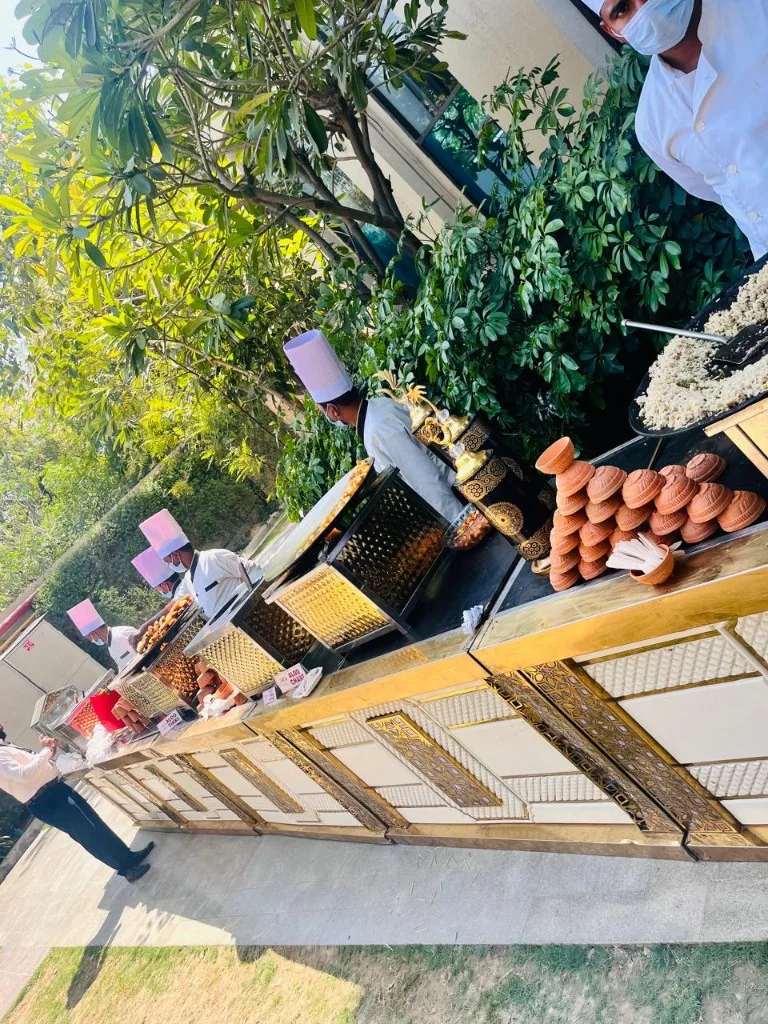
For a thirty-minute break we plan on clearing the full headcount in twenty, leaving a buffer at each end for people arriving late and sessions overrunning. At 150 attendees that means one station running at pace with a second plating point. At 400 attendees it means three stations positioned separately so three queues form instead of one.
We also pre-stage more aggressively than at a wedding. Dough is portioned and stuffings are prepped to a tighter schedule so that the first plate goes out within sixty seconds of the break starting, rather than the station warming up while a queue builds.
Positioning inside a conference venue
Corporate venues have narrower constraints than banquet halls. Counters usually go in a pre-function area or foyer, and the practical question is whether the position blocks the flow between the session hall and the washrooms — because at a conference break, that is the busiest route in the building.
We position counters perpendicular to the main flow rather than across it, and we ask for two approach sides wherever the floor allows. In hotels with full banquet facilities this is normally straightforward; in older venues and office premises it needs a site visit.
Power, gas and ventilation need confirming in advance. Many corporate venues do not permit open flame in enclosed pre-function areas, which changes the equipment plan. Knowing that before the day rather than on it is the difference between a smooth event and an improvised one.
What goes on a corporate brunch menu
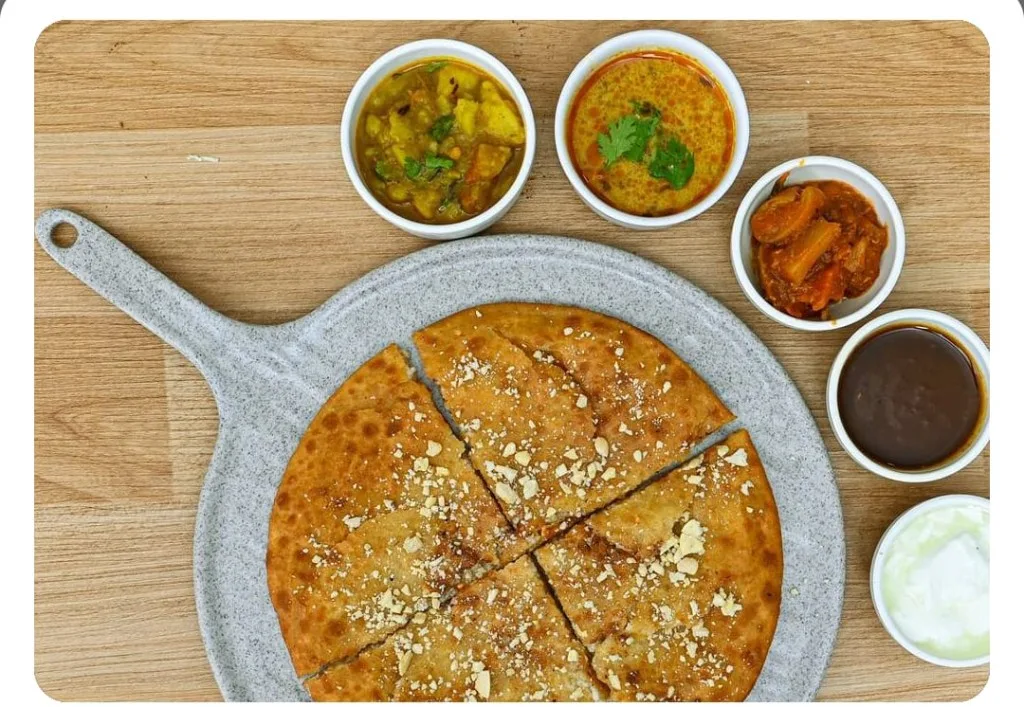
Keep it short. Two paratha fillings — aloo and paneer covers almost every preference — with a seasonal sabzi, pickle, green chutney and curd. Chai and coffee alongside.
Where a corporate menu differs from a wedding menu is in plate design. Attendees are standing, often holding a phone or a lanyard, and frequently going straight back into a session. Portions are smaller, everything is fork-manageable or hand-manageable, and nothing on the plate drips. We plate a half-paratha portion with a small sabzi katori rather than the full serving we would give a wedding guest.
Dietary labelling is standard on our corporate setups. Our kitchen is entirely vegetarian, which removes the largest category of concern, and Jain options prepared without onion, garlic or root vegetables can be run from a separate stuffing on request.
Formats beyond the conference break
Morning AGMs work well with a paratha counter — a substantial breakfast for shareholders and directors arriving early, and it holds up better than a pastry table across a long morning.
Product launches typically want the counter running through the event rather than in a fixed window, positioned near the demonstration area so it contributes atmosphere.
Internal team events and offsites are where the format is most cost-effective, because the guest list is fixed and known, so staffing can be sized exactly rather than with a margin for uncertainty.
Headcount and cost
We cater corporate events from around 50 attendees upward. Below roughly 150 a single station is sufficient. Above that, stations are added rather than pushing an existing one harder.
Indicative per-plate rates for a corporate paratha brunch start from around ₹650, moving with headcount, the number of stations required by your service window, and venue logistics. A tighter service window costs more than a relaxed one for the same headcount, because it needs more stations for the same number of plates — this is the variable most planners do not anticipate.
More detail on corporate catering nationwide, our live paratha stations, and pure vegetarian catering.
Plan Your Event
Ready to bring this to your celebration?
Book a food trial, request our menu, or talk to our team about live paratha and chaat stations for your guest count.