Most North Indian wedding menus are too long. They are assembled by adding dishes that sound good rather than by designing something a guest will eat in one sitting, and the result is a menu that photographs well, costs a great deal, and leaves half of itself on the plate. This is how we structure one instead.
Count the dishes, then remove three
A vegetarian wedding dinner works well with eight to ten dishes across the main service. That means roughly: two paneer or main vegetable dishes, two lighter sabzis, one dal, one rice preparation, two or three breads, and a raita or salad.
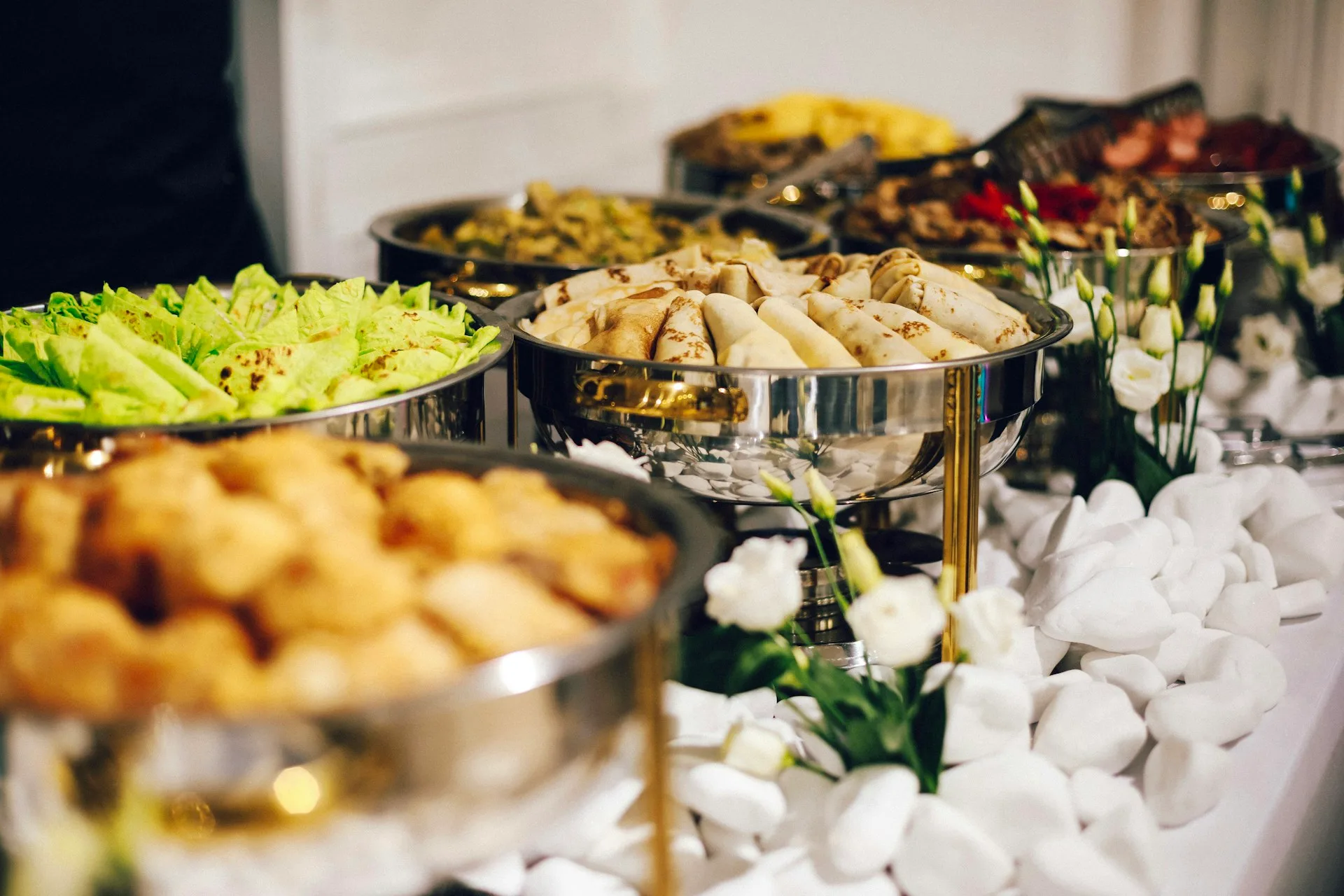
Fourteen or sixteen dishes does not make a better dinner. A guest eats a fixed amount, and a longer menu simply spreads that amount thinner across more items, so nothing gets tasted properly and a great deal is wasted. It also slows the buffet, because each guest spends longer at the line deciding.
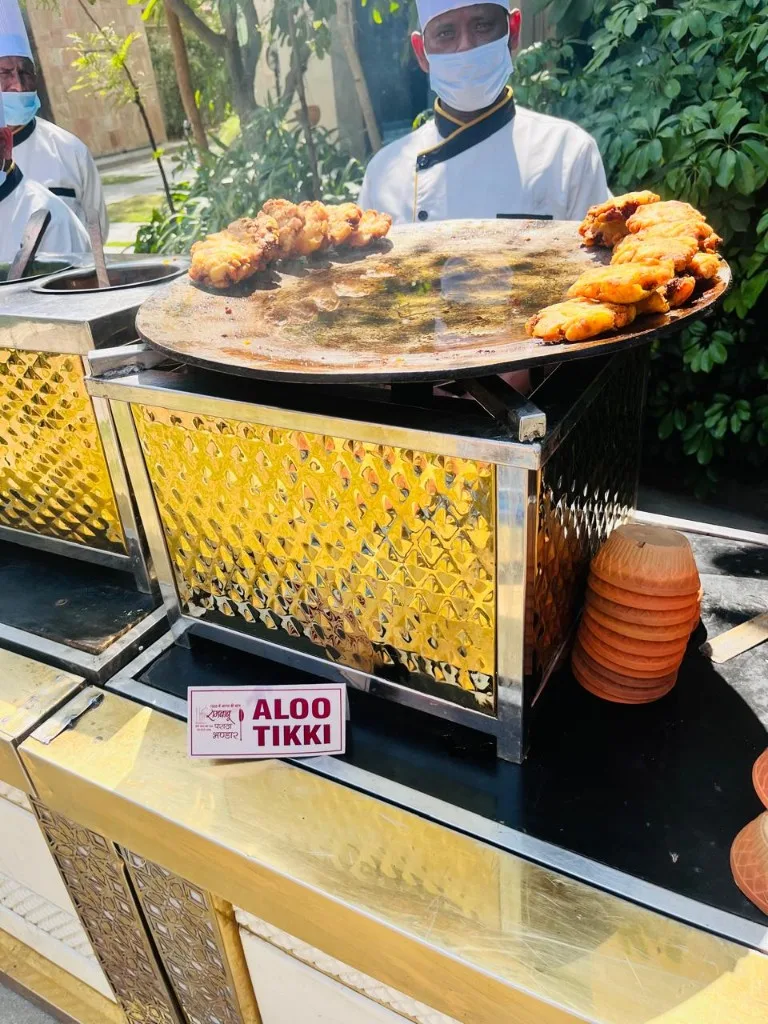
If you want the menu to feel abundant, add a live counter rather than more buffet dishes. A chaat or paratha station reads as generosity in a way that a twelfth sabzi does not.
Balance richness deliberately
The most common structural error is a menu where everything is rich. Paneer in a cashew gravy, malai kofta, dal makhani, a creamed vegetable, naan with butter. Individually each is good. Together they are heavy enough that guests eat a few bites of each and stop.
We plan against a rough rule: for every rich, cream- or cashew-based dish, one dish that is dry, tomato-based, or vegetable-forward. A jeera aloo, a dry gobi, a seasonal sabzi with minimal gravy. These are the dishes guests come back for at the end of the evening, and they are usually the cheapest things on the menu.
Dal is where this shows most clearly. A dal makhani is a rich dish and should be treated as one. Where there is only one dal on a menu alongside several heavy mains, a simpler dal — tadka, or a moong-masoor — serves the meal better.
Breads and the timing problem
Breads are the item most likely to be served badly at a wedding, because they have the shortest window and are usually made furthest from the guest.
Tandoori roti and naan produced in bulk and stacked in a warmer are soft, slightly damp, and nothing like the same bread eaten fresh. If breads matter to you — and in a North Indian menu they should — they need to be made close to service, in batches, or made live.
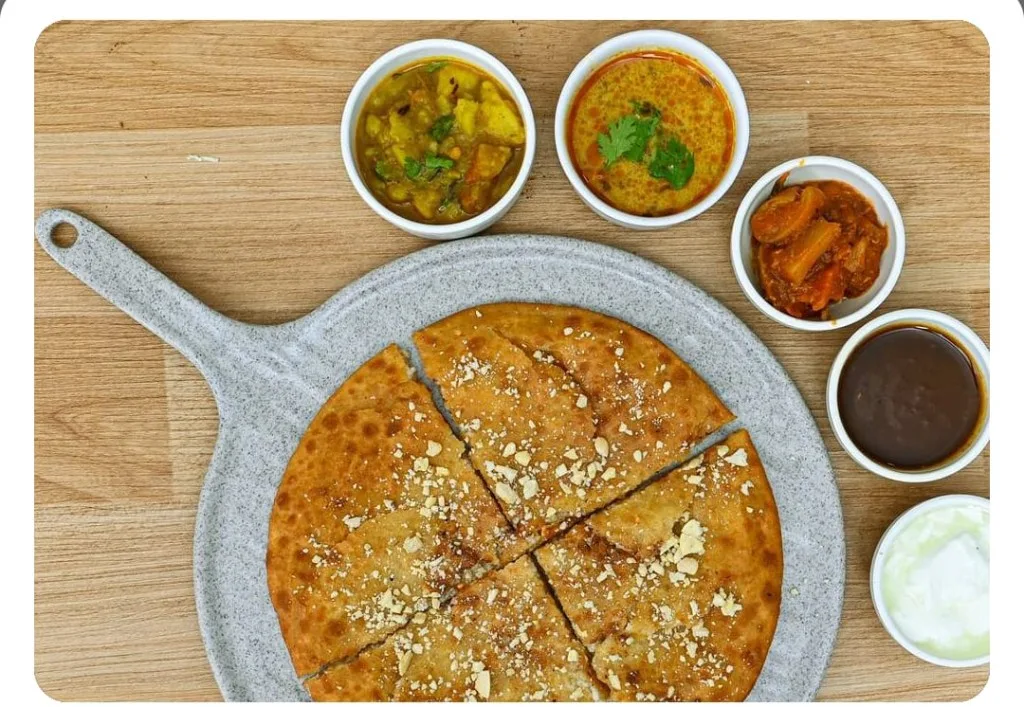
This is the argument for a live paratha station as part of the main service rather than only at the cocktail hour. It puts one bread on the menu that is unambiguously fresh, and guests notice which one it is.
Rice deserves more thought than it gets
Rice is frequently an afterthought — a pulao that exists to fill space on the buffet. It is worth doing properly, because a well-made rice dish is what guests eat with the dals and gravies that took the most work.
One rice preparation, done well, beats two done indifferently. A vegetable pulao with whole spices and properly separated grains, or a simple jeera rice if the gravies are the stars. Biryani-style preparations are excellent but need to be treated as a main dish rather than a side, and menus should be shortened elsewhere to accommodate them.
The sweet course
Two sweets and one live dessert element is enough. In winter, a hot halwa — gajar, or moong dal — alongside a cold sweet is the combination that works best, and it suits the weather that most North Indian weddings happen in.
Mithai should be genuinely good rather than plentiful. A small selection of well-made sweets is better received than a long counter of average ones, and a Mathura peda or a properly made laddoo carries more regional character than an imported dessert.
Kulfi and matka kulfi counters remain the most reliable live dessert option, largely because they hold well and serve fast at the end of an evening when the kitchen is winding down.
Seasonality is not decorative
North Indian wedding season runs through the cold months, which is when the region's vegetables are at their best. Matar, gajar, methi, sarson, gobi, and fresh gond are all winter ingredients, and a menu built around them in January is better and cheaper than one built around out-of-season produce.
The same menu in May needs different choices. Insisting on a winter dish in summer means paying more for a worse version of it.
Practical constraints to plan around
Guest profile matters. An older guest list eats lighter and earlier and appreciates simpler food. A younger reception crowd eats later and engages more with live counters. A mixed regional guest list benefits from two or three dishes outside the standard North Indian set.
Venue constraints matter too. A venue without a working back kitchen cannot support a menu with many last-minute finishes, and a menu should be designed for what the venue can actually do rather than adjusted on the day.
And service ratios matter more than menu length. A shorter menu served by enough staff, with short queues and hot food, is a better dinner than a longer one served by too few.
More on our menu and indicative pricing, wedding catering, and pure vegetarian catering.
Plan Your Event
Ready to bring this to your celebration?
Book a food trial, request our menu, or talk to our team about live paratha and chaat stations for your guest count.