Wedding catering trend lists tend to be written from the outside. What follows is drawn from what families have actually asked us for over the past few seasons across India, what worked when we did it, and what we now advise against.
Shorter menus, better executed
The clearest shift is away from menu length as a measure of hospitality. Families that a few years ago would have asked for sixteen dishes are asking for nine and spending the difference on live counters and service staff.
This is the right direction. Guests eat a fixed amount regardless of how many dishes are offered, and a shorter menu means each dish is prepared in a manageable quantity, served fresher, and finished rather than picked at. Waste falls substantially, which matters to families who are increasingly uncomfortable with the scale of it.
Regional specificity over generic luxury
The second real change is a move away from interchangeable premium menus toward food that is identifiably from somewhere.
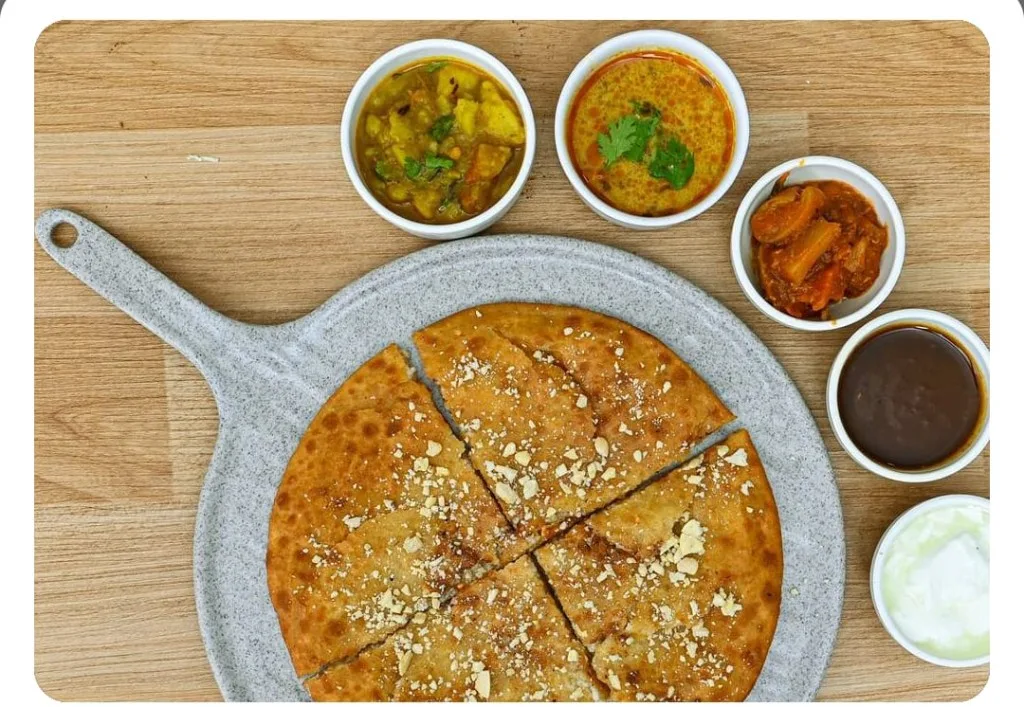
For us that means Braj — chuda matar in winter, kanji bade, Mathura peda, the Agra paratha itself. Families are choosing these over continental or pan-Asian counters that could appear at any wedding anywhere. A regional dish that guests have not eaten before does more for a menu than an imported one they have eaten many times.
The requirement is that it be genuine. A regional dish out of season, or made by a kitchen with no connection to the region, is a menu line rather than a dish. This is worth asking a caterer about directly.
Live counters, but fewer and better
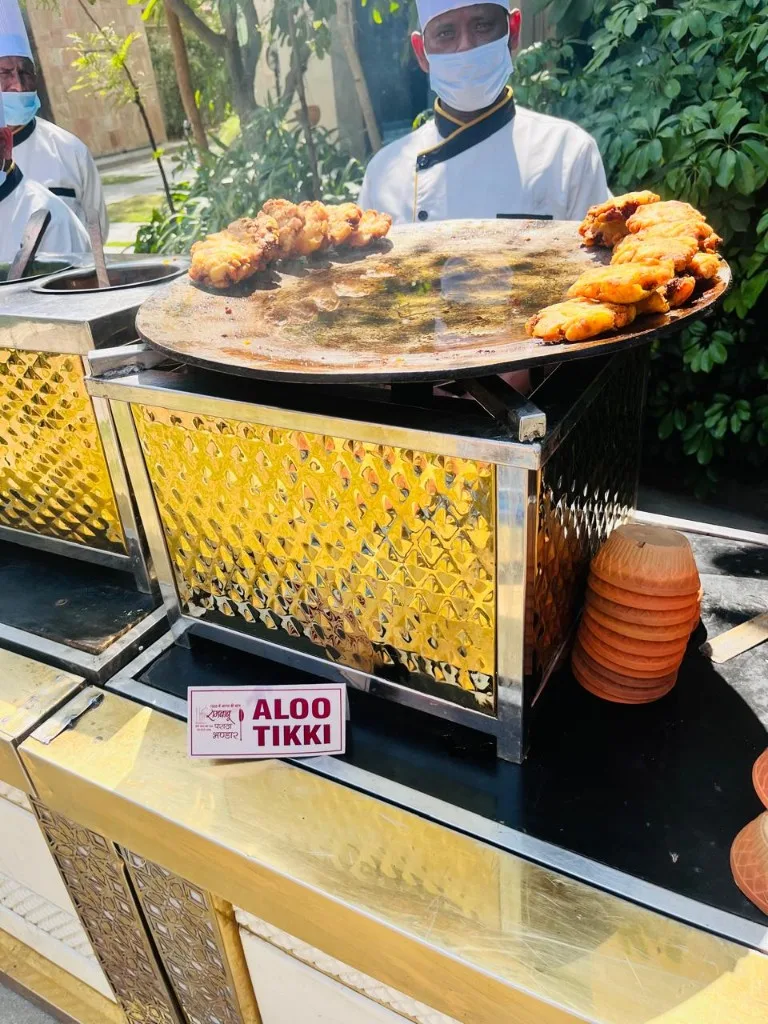
Live stations are no longer a differentiator — every caterer offers them. What has changed is that families are learning the difference between a counter that works and one that exists for the photograph.
The pattern we now recommend and increasingly get asked for is two or three well-staffed counters instead of six thinly-staffed ones. Six counters at a 400-guest wedding means each has one server, queues form at all of them, and the kitchen is stretched across six prep lines. Three counters with two servers each move more food, faster, and better.
Placement is getting more attention too, which is overdue. Counters spread across the floor rather than lined up together, offset from the bar, out of walkways.
Pure vegetarian as a positive choice
Vegetarian menus are increasingly chosen rather than accommodated — for ceremonial reasons, for family preference, and because a fully vegetarian kitchen removes cross-contamination concerns for observant guests entirely.
Our kitchen has always been vegetarian, so this is less a trend we adapted to than one that arrived where we already were. What has changed is that families now ask explicitly whether the kitchen handles meat anywhere, which is the right question.
Jain requirements are being planned for earlier rather than raised on the day, which makes them much easier to serve properly.
Waste as a real consideration
Families are asking what happens to surplus food, and asking earlier in the conversation than they used to. It is a welcome change, and it connects directly to the shift toward shorter menus.
The most effective thing any family can do about wedding food waste is to stop over-ordering. A menu sized to what guests will actually eat, based on a realistic headcount rather than a defensive one, cuts surplus far more than any downstream arrangement. Beyond that, planning the quantity per dish rather than applying a flat multiplier across a long menu makes a measurable difference — the dishes guests finish and the dishes they leave are fairly predictable, and quantities should reflect that.
Practical steps that work: confirm headcount as late as the caterer will allow, keep the menu short, and agree in advance where usable surplus goes rather than deciding at midnight when everyone is tired.
Food trials as standard
Tasting before booking has moved from unusual to expected, and it should be. It is the only way to know what you are buying.
A useful trial covers the specific dishes planned for your menu, including live-station items prepared the way they will be on the day. A trial of a caterer's general repertoire tells you much less.
Three trends worth skipping
Molecular and deconstructed presentations. Spheres, foams, and dishes served in test tubes. These photograph well and eat poorly at scale, they do not hold across a service window, and at a wedding guests want food they recognise. We have been asked and we have declined.
Counter proliferation. Eight live counters at a 300-guest wedding. It looks generous on a floor plan and produces eight understaffed queues. Fewer counters, better staffed, is better in every measurable way and costs less.
Out-of-season signature dishes. Insisting on a winter speciality for a May wedding because it was on a list. You pay a premium for an inferior version. Ask what is good in the month you are marrying and build from there.
What has not changed
Hot food served hot. Short queues. Enough staff. Fresh breads. Dishes that taste like the region they came from.
Every trend above is either a version of one of those or a distraction from it. The families who are happiest with their catering afterwards are consistently the ones who spent on the fundamentals and treated everything else as optional.
More on wedding catering, live chaat counters, and menu and pricing.
Plan Your Event
Ready to bring this to your celebration?
Book a food trial, request our menu, or talk to our team about live paratha and chaat stations for your guest count.